


Last week, we were delighted to host a Year 8 student from a local school for a one-day work taster. They were 13 years old, had no coding knowledge, and left having built and shipped a fully playable browser-based video game. We think it worth writing about, not because it’s a remarkable story about a young person (although it is), but because of what it demonstrated about how AI tools work when used well.
The brief
The student received the brief at 9am. It set out the task clearly: design and build a one-screen boss-fight game, in a single day, using Claude Code (Anthropic's AI-powered coding tool), which lets you build and ship software through conversation. The game needed a controllable player, a boss with a health bar, attacks to dodge, the ability to shoot back, and three lives. Win and lose states. A complete, playable experience.
At 9:30am the team sat down together so the student could ask questions, get oriented, and understand what the day ahead would look like. Real developers, the brief noted, do not just start typing. They follow a process.
The brief was well-pitched for someone with the student's background. A keen gamer with a passion for demanding titles like Elden Ring and other action RPGs, they understood instinctively what a good boss fight should feel like. What they had never done was build one – that gap between player and maker is exactly what the day was designed to close.
Plan first, build second
Before opening a laptop, the student planned the game on paper. Characters, mechanics, structure, win conditions: all mapped out before a single prompt was written. That discipline shaped everything that followed. When they did sit down with Claude Code, their first prompt was specific and purposeful, and the output reflected that.
What followed over the next few hours was genuinely instructive to watch.
Iteration is the work
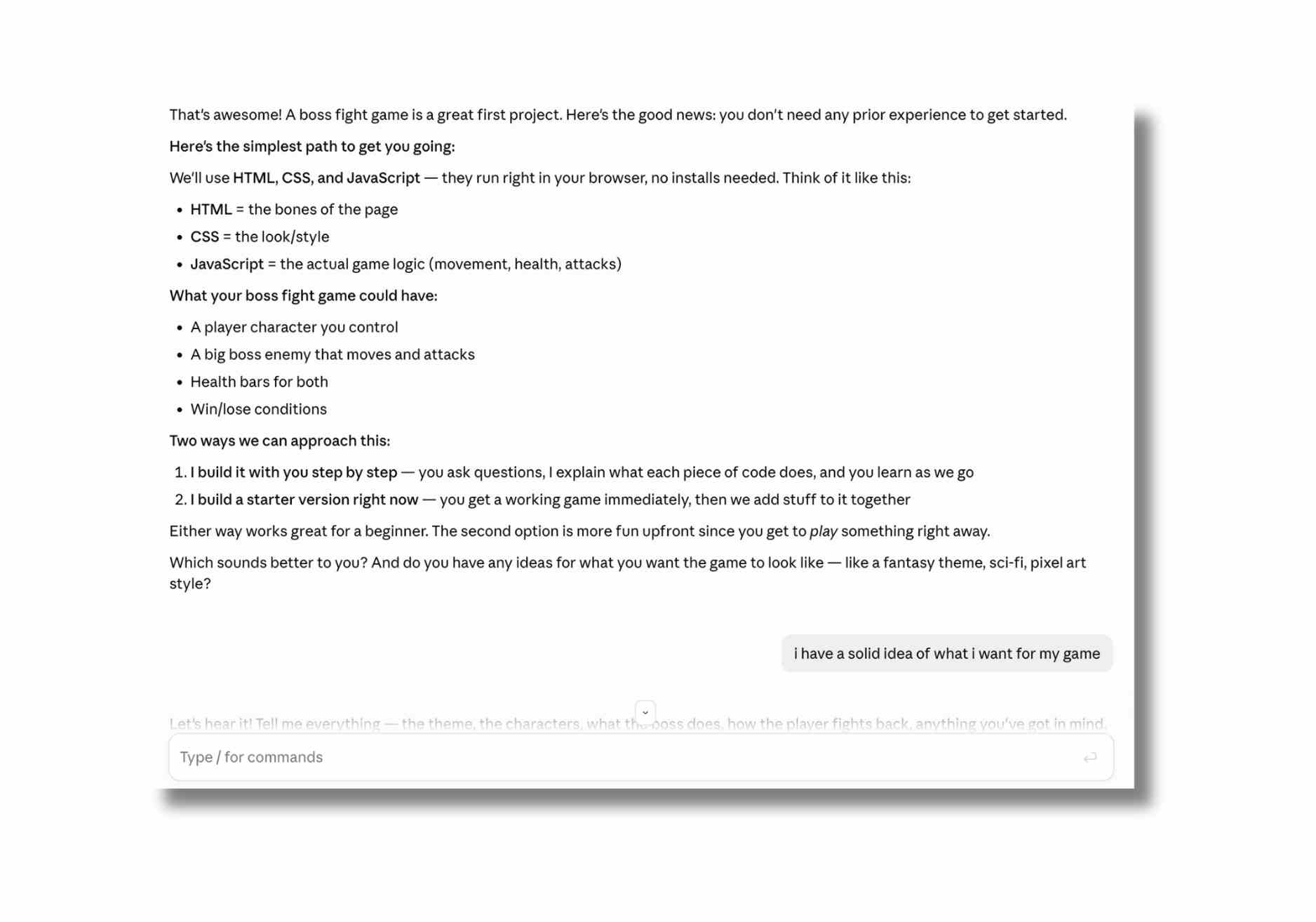
The session log tells the story: The student did not just generate a game and call it done. They interrogated the output, identified what was and was not working, and made targeted, precise requests to improve it.
A restart bug, where the game only worked once per browser load, was caught and addressed directly. The student specified exactly the behaviour they wanted: a visible Play Again button, a clean reset of health, positions and projectiles and no replaying of the intro cinematic. The fix was precise because the request was precise.
Each of these moments reflects the same underlying skill: knowing what you want, evaluating what you have, and knowing how to ask for the difference. That’s closer to a human, linguistic, professional skill than a technical one.
The landing page
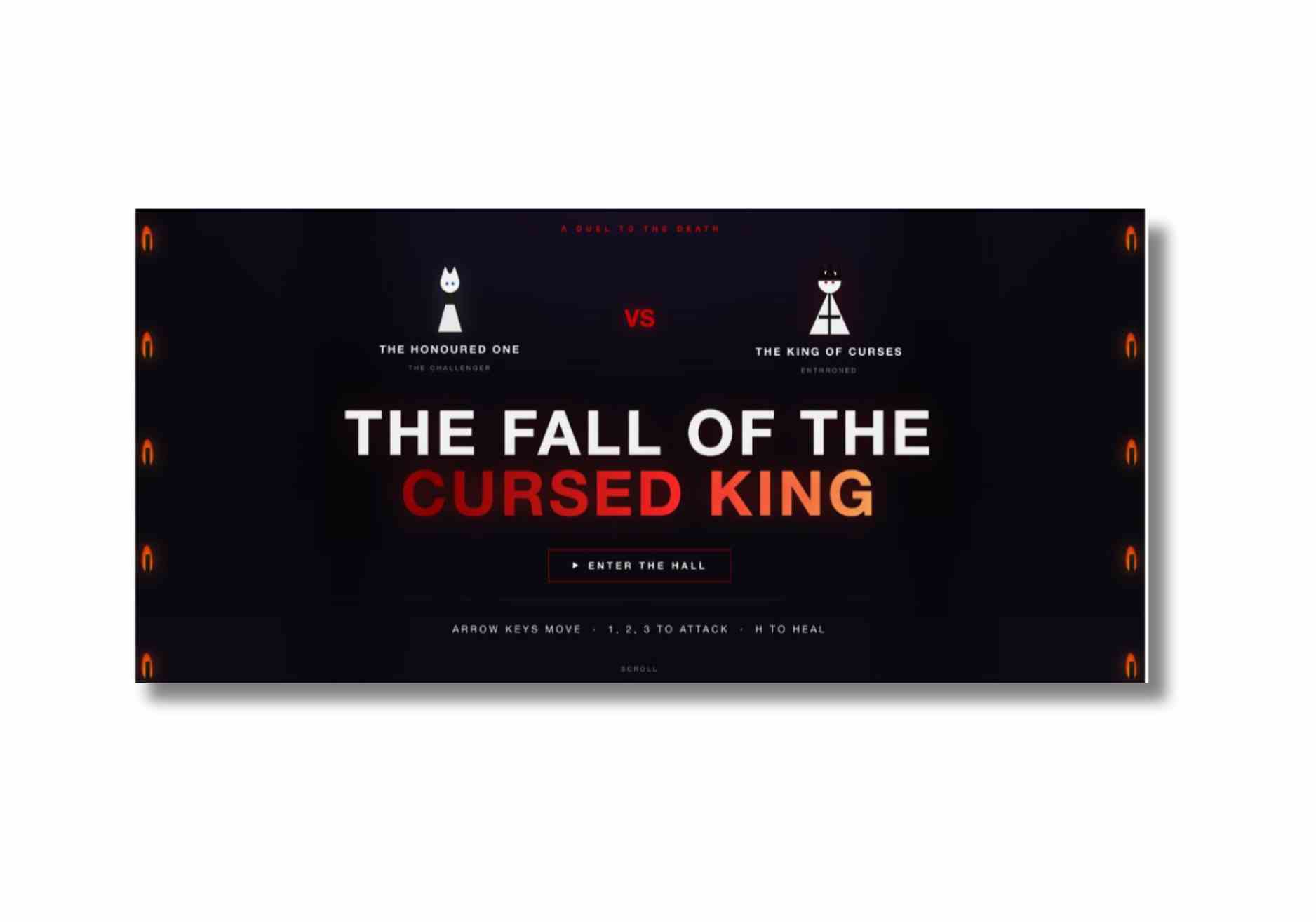
In parallel, we built the accompanying landing page, working from the student's direction. They described their characters, the look and feel of the world, and how they wanted the game to be presented. We took that brief and built accordingly: character introductions, move descriptions, lore, and a framing that matched what had been created in the game. The student was the creative lead. We were the execution team. It worked exactly as a good brief-to-build relationship should.
The result
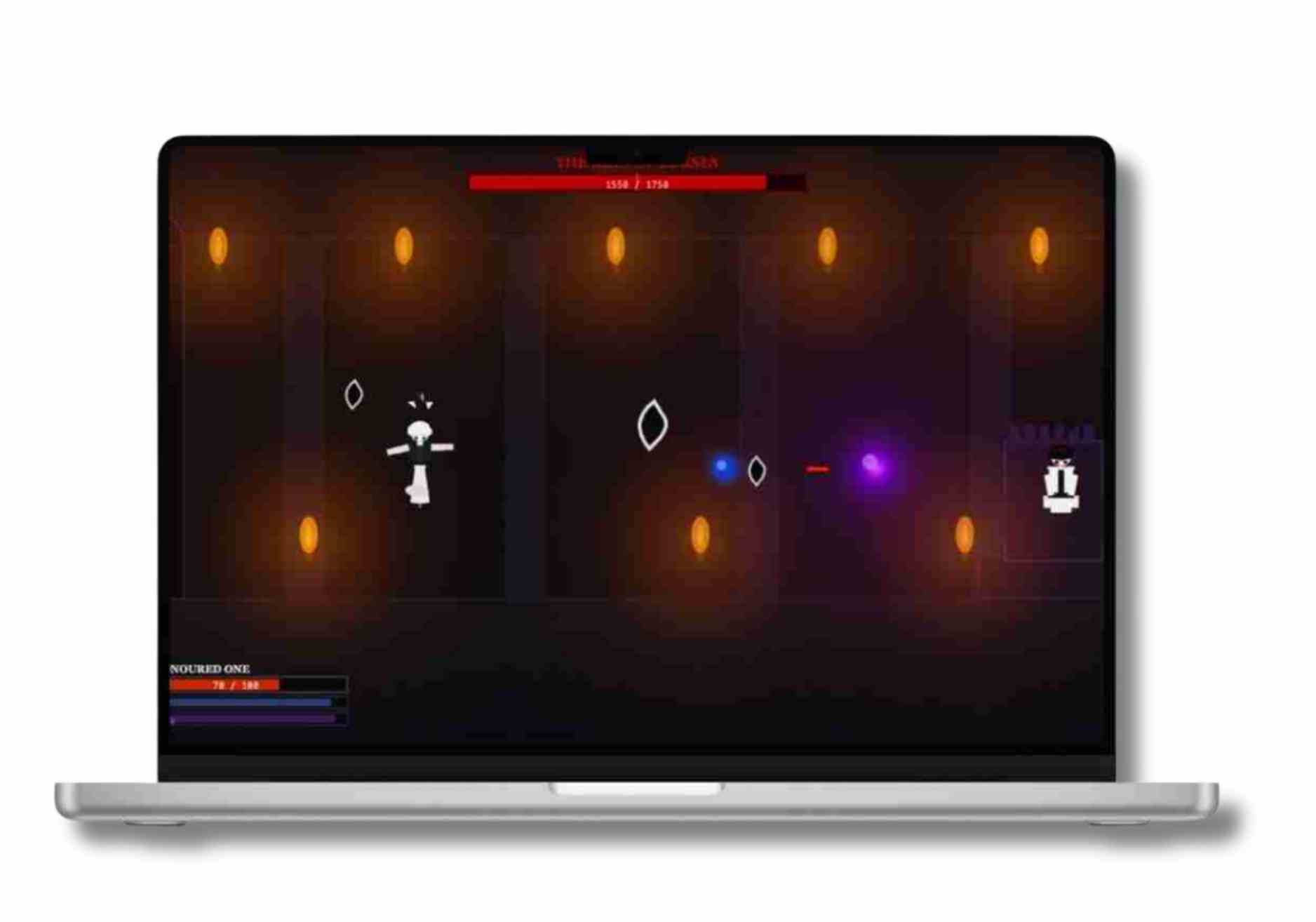
At 3:00pm, the student presented their work: The Fall of the Cursed King is a fully playable, browser-based boss battle, built and hosted on Netlify – a platform used to deploy and host web-based projects. It features two original characters, multiple attack types mapped to individual keys, a two-phase boss mechanic that triggers new attack patterns at half health, a three-lives system, a cinematic opening sequence, and win and lose screens. There is also a polished landing page that frames the whole thing with genuine craft.
Six hours. One brief. One 13-year-old with no coding knowledge and a very clear sense of what a great boss fight should feel like.
What we took from it
There is a lot of conversation at the moment about what AI means for people who work in and around the web: designers, developers, strategists. Some of it is anxious, some overconfident, and most of it is still searching for the right frame.
What this work taster demonstrated, clearly and practically, is that the frame is this: strategy, direction and existing knowledge are critical. The student did not write a line of code. But they decided what the game was, caught what was not working, directed every meaningful change, and delivered a finished product they were rightly proud of. These are skills worth developing, at any age.
If you would like to talk to us about how we approach AI in our work, get in touch via [email protected]